When it comes to financial planning, you are usually thoughtful and measured. You set priorities, calculate returns and expenses, assess risks, and explore investment opportunities.
But when it comes to charity and donations, do you approach them with the same clarity? Or do you move from careful planning to emotional impulse? Do you give in response to immediate needs, or according to a considered plan?
It may seem like an unusual question, but it is an important one. Why don’t we treat charity with the same rational care that we apply to the rest of our financial decisions? Charity, at its heart, is a noble human emotion — but it is also a conscious choice.
We see this often. Many people feel deep compassion when faced with urgent hardship, yet in reality they offer nothing. Not out of reluctance to help, but because they have never paused to ask themselves: What is my role in this? How can I contribute meaningfully?
Why Should You Plan Your Charity?
Because charity affects three parties: the person in need, the community, and the donor. The difference between one act of giving and another lies not only in intention (niyyah), but in how that charity is managed.
Planning helps you recognise different forms of giving beyond one-off donations. Direct donations are vital in emergencies and urgent humanitarian crises — but they are not the only way to give.
There is another approach that does not rely solely on immediate need. It seeks to invest in the lives of those in poverty — as Waqf shares do.
In a Waqf Share, the capital is not spent. It is invested, and its returns are used to support good causes year after year. In this way, we move from simply “spending money” to managing it wisely for greater impact.
By its very nature, Waqf is Sadaqah Jariyah — an ongoing charity in Islam — because continuity lies at its core.

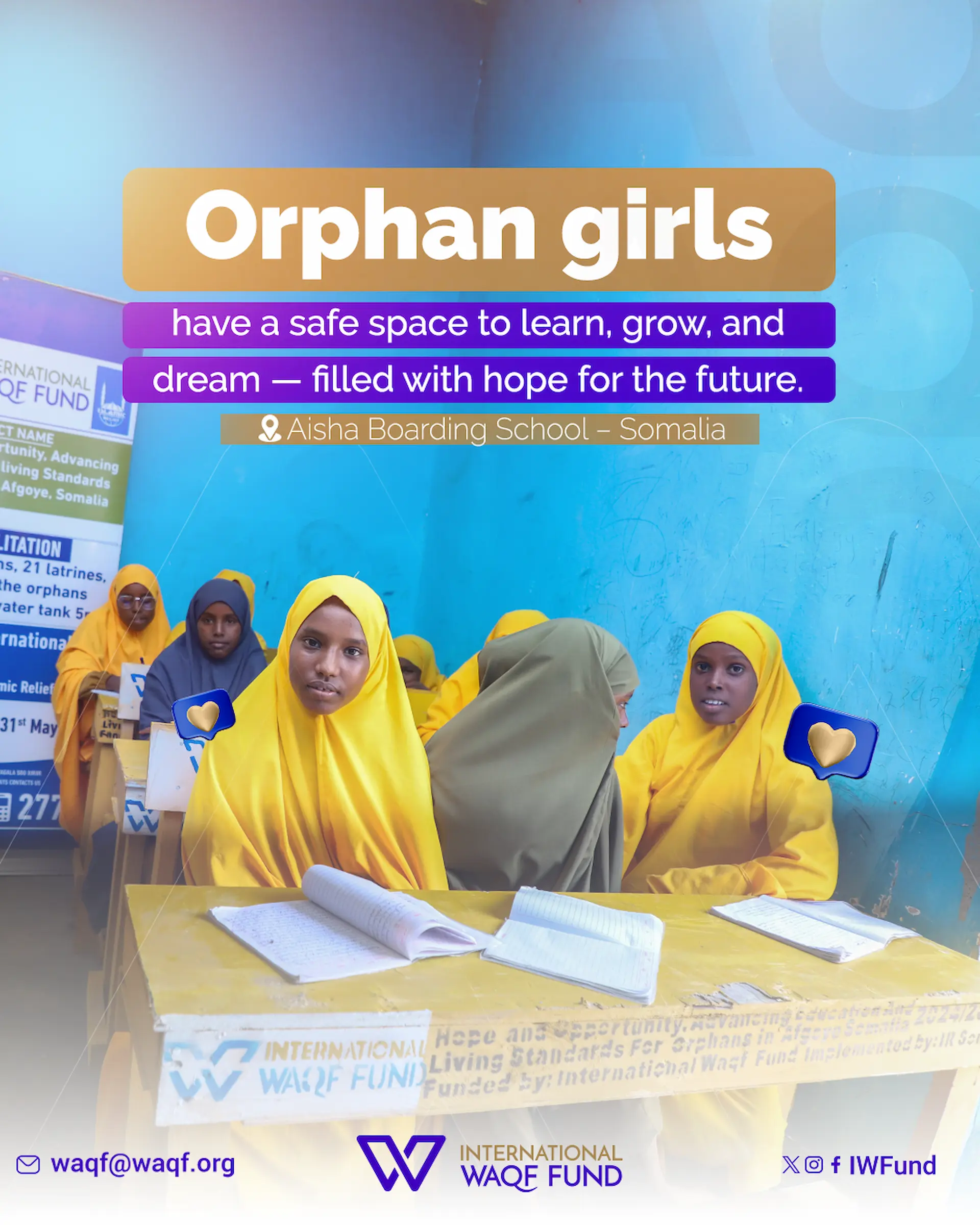
Take the story of Kaltoon, a young Somali orphan. She lives in difficult circumstances with her mother and six siblings. She loves learning and dreams of becoming a nurse, yet the educational environment available to girls like her was inadequate and unsafe.
Through the International Waqf Fund, using the returns generated from Waqf shares, we funded the renovation of a school for orphaned girls. We provided essential study materials and ensured the environment was safe and supportive. Kaltoon and her classmates were able to return to their studies and continue their education.
The lasting impact this will have on Kaltoon’s life would not have been possible without careful planning — both our prioritisation as an organisation and the foresight of donors who chose to support the Education Waqf.
Those Waqf shares were a thoughtful investment. After completing this project, they entered a new investment cycle and will fund another educational initiative next year.
Charity grows in impact, depth, and reward when it is approached with wisdom. Just as we plan our investments to protect our future and grow our wealth, we can plan our charity to protect its impact and ensure its reward continues.
Through Waqf — a lasting charity, a charity that endures — you give once and benefit forever.